What to Do After a Rear-End Accident in California (Even If It Seems “Minor”)
The following article is provided by Solum Space Law, APC for general information only and should not be taken as legal advice. Every case is unique—if you have questions about protecting your rights after an injury in Southern California, call our office for a free consultation.
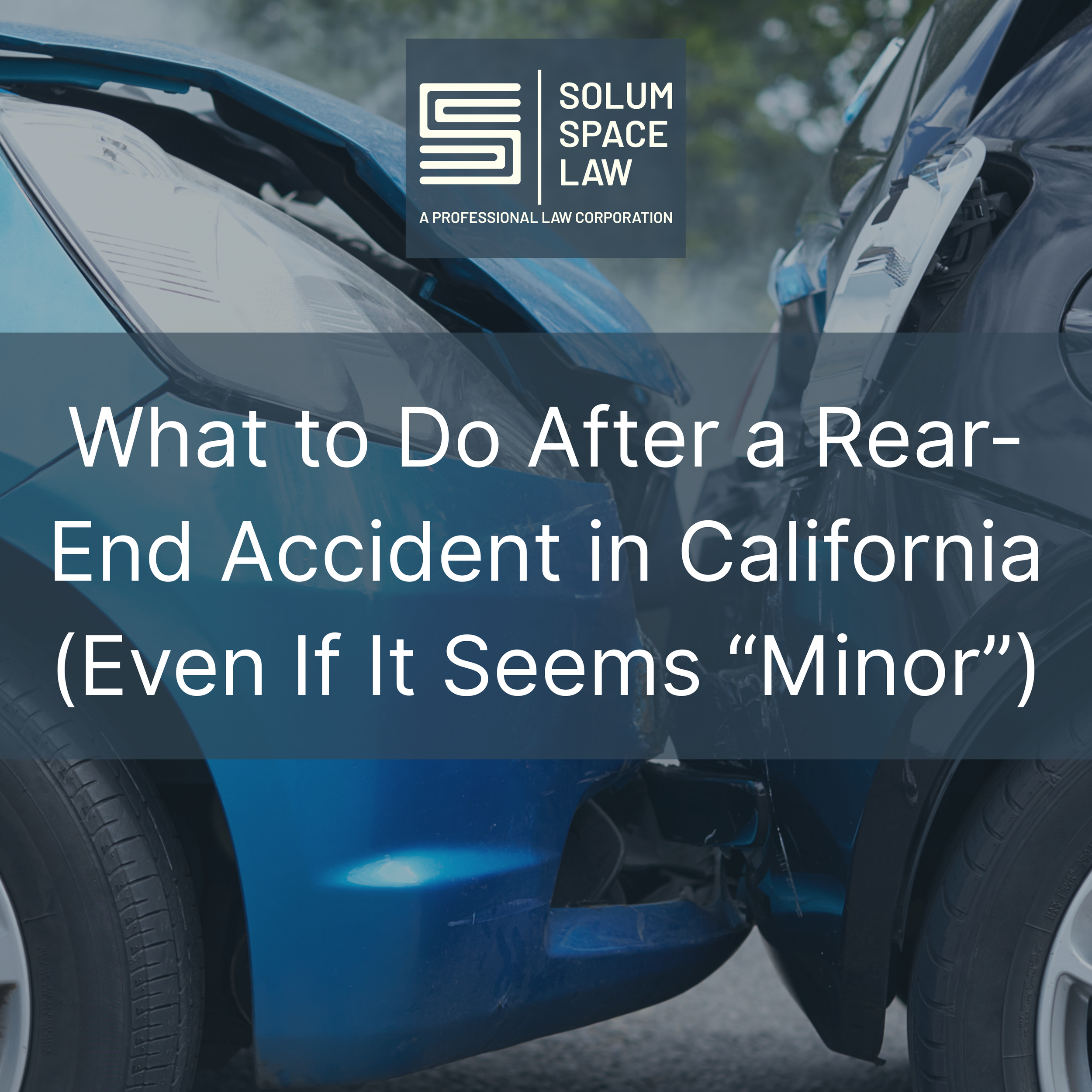
Rear-end collisions are among the most common accidents on California roads—and also among the most misunderstood. Many people assume that if the crash was “low speed” or there is little visible damage, there’s nothing to worry about. That assumption can cost injured drivers thousands of dollars.
Here’s what you should know if you’ve been rear-ended in California.
1. Fault Is Usually—But Not Always—Straightforward
California law generally presumes that the rear driver is at fault for failing to maintain a safe stopping distance. While this presumption helps establish liability, it does not prevent the insurance company from challenging the claim.
Insurers frequently attempt to shift or reduce responsibility by arguing that the front driver:
Stopped suddenly or unnecessarily
Changed lanes abruptly
Had pre-existing vehicle damage
Contributed in some other way to the collision
Even when these arguments are weak, they can still slow down the claim and complicate negotiations.
2. “Minor” Accidents Can Cause Serious Injuries
One of the most damaging myths surrounding rear-end collisions is that low-speed impacts do not cause real injuries. In reality, rear-end crashes commonly result in:
Whiplash and cervical strain
Herniated or bulging discs
Shoulder and lower back injuries
Headaches and nerve irritation
These injuries may not produce immediate pain. It is common for symptoms to worsen days after the accident, once adrenaline wears off. Insurance companies often exploit delayed symptoms to argue that injuries were unrelated or exaggerated.
3. Seek Medical Attention Early, even if You Feel Fine
Prompt medical evaluation serves two purposes. First, it protects your health by identifying injuries before they worsen. Second, it creates a contemporaneous medical record linking your injuries to the accident.
Delaying care allows insurers to argue that:
The injury occurred later
The condition was pre-existing
Treatment was unnecessary
Even a short delay can materially weaken a claim.
4. Document the Accident Thoroughly
Strong documentation often makes the difference between a smooth claim and a prolonged dispute. When possible, you should:
Photograph vehicle damage, skid marks, and road conditions
Capture license plates and insurance information
Identify witnesses and obtain contact details
Preserve dashcam or nearby surveillance footage
This evidence helps counter later attempts to minimize or reinterpret what occurred.
5. Early Legal Guidance Helps Avoid Costly Mistakes
Rear-end cases rarely fail because liability is unclear—they fail because of documentation gaps, inconsistent statements, or premature settlements. Early legal involvement helps preserve evidence, manage communications, and ensure that the full scope of damages is considered.
This blog is attorney advertising. The material below is presented by Solum Space Law, APC for educational purposes only and is not a substitute for tailored legal advice. Cases are fact-specific; if you have questions about the value of your claim, contact us for a complimentary consultation.